A Practical Guide: Experience Sharing on Right-Angle Gear Motor Selection in the Logistics and Conveying Field
The logistics and conveying industry is experiencing unprecedented growth, fueled by the explosive expansion of e-commerce. This surge in demand has placed immense pressure on supply chains, requiring efficient, reliable, and adaptable solutions. At the heart of many modern logistics systems lies the right-angle gear motor, a pivotal component responsible for translating motor power into controlled rotational motion for a vast array of applications – from conveyor belts and automated guided vehicles (AGVs) to sorting systems and robotic arms. Choosing the right right-angle gear motor isn't simply a mechanical selection; it's a strategic decision impacting overall system performance, efficiency, and long-term cost. This article shares practical experience and insights into right-angle gear motor selection within the logistics and conveying field, addressing key considerations and emerging trends.
Understanding the Core Requirements: A Multi-Faceted Approach
Selecting a right-angle gear motor is not a one-size-fits-all process. A thorough understanding of application-specific requirements is paramount. These requirements can be broadly categorized as follows:
- Load Characteristics: This is arguably the most critical factor. Consider the load's magnitude (torque required for operation), type (constant load, variable load, shock load), and rotational speed. Accurately estimating these parameters is crucial to avoid under- or over-sizing the motor. Dynamic loads, common in conveyors, often demand motors with higher torque ratings and robust gearboxes. For example, an AGV carrying a heavy load will require significantly more power than a simple conveyor belt running at a constant speed.
- Duty Cycle: The duty cycle defines how frequently the motor will be in operation and for how long. Continuous operation demands motors designed for sustained performance, while intermittent operation allows for more flexibility in motor selection. Factors like temperature and humidity also influence the motor’s duty cycle considerations. The increasing popularity of automated warehouses, operating 24/7, highlights the importance of high-reliability motors.
- Speed and Accuracy: The required output speed directly influences the gear ratio needed. Applications requiring precise positioning, like sorting systems, demand motors with accurate speed control and low backlash. Conversely, applications like power conveyors may prioritize high torque over precise speed.
- Environmental Conditions: Logistics environments can be harsh, characterized by dust, moisture, temperature fluctuations, and vibrations. Motors must be appropriately sealed and protected to withstand these conditions. IP ratings (Ingress Protection) are essential for safeguarding against dust and water ingress. The current focus on sustainability also requires consideration of energy-efficient motor designs that minimize heat generation.
Key Right-Angle Gear Motor Types and Their Applications
Several types of right-angle gear motors are available, each with its own strengths and weaknesses. Understanding these differences is essential for informed selection.
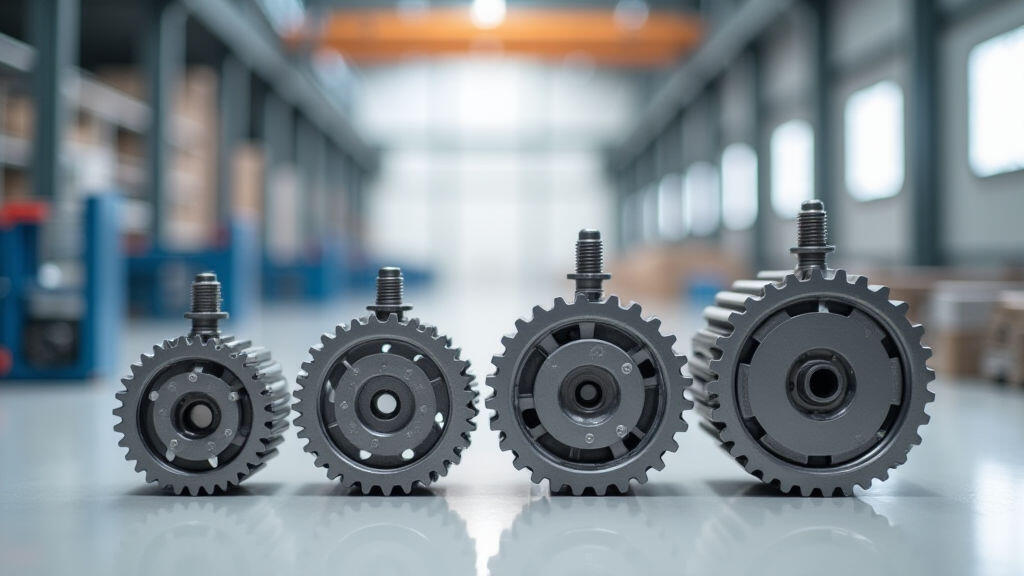
- Spur Gear Right-Angle Motors: These are the simplest and most cost-effective option, suitable for applications with moderate torque requirements and relatively smooth operation. They offer good efficiency but are generally noisier than other types.
- Helical Gear Right-Angle Motors: Helical gears provide a smoother, quieter operation than spur gears, with increased load capacity. They are a popular choice for applications requiring higher precision and reduced noise.
- Bevel Gear Right-Angle Motors: Bevel gears are known for their compact size and high power density, making them suitable for space-constrained applications. They offer good efficiency and are often used in applications where axial thrust loads need to be minimized.
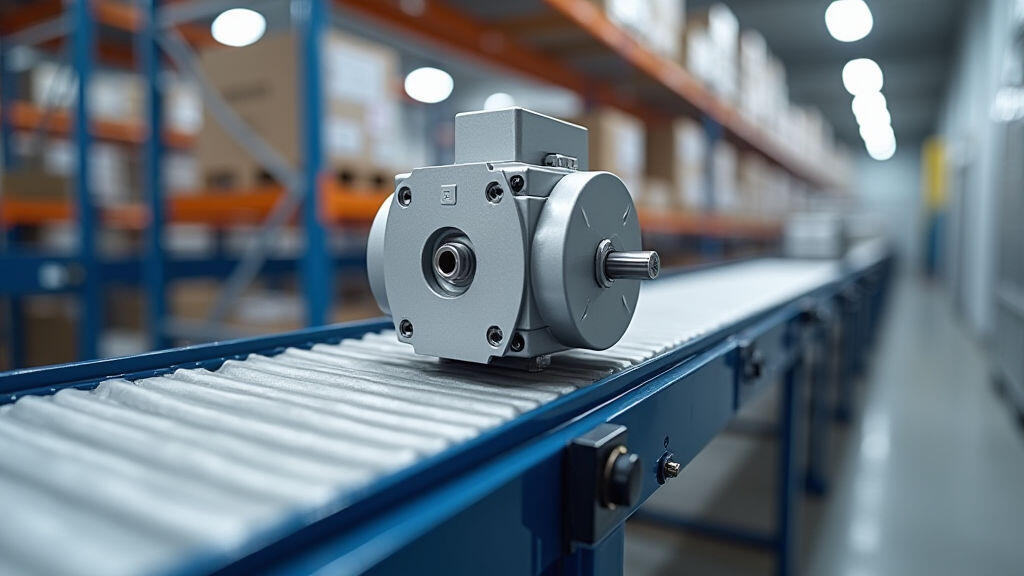
- Worm Gear Right-Angle Motors: Worm gears offer extremely high gear ratios in a compact design. This makes them ideal for applications requiring large torque multiplication, such as heavy-duty conveyors and lifting mechanisms. However, they are generally less efficient than other types.
The Role of Technology: Intelligent Motor Control and Monitoring
Modern logistics systems increasingly rely on intelligent motor control and monitoring systems to optimize performance and minimize downtime. These systems leverage sensors, microprocessors, and communication protocols (like CAN bus and Ethernet) to provide real-time data on motor performance.
- Variable Frequency Drives (VFDs): VFDs allow for precise speed control of the motor, enabling energy savings and improved system responsiveness. They are particularly useful in applications with variable loads.
- Predictive Maintenance: Motor monitoring systems can detect potential problems, such as overheating, vibration, and current fluctuations, allowing for proactive maintenance and preventing costly breakdowns. This aligns with the industry's growing emphasis on predictive maintenance driven by IIoT (Industrial Internet of Things) technologies.
- Remote Monitoring and Control: Cloud-based platforms enable remote monitoring and control of motors, allowing operators to diagnose problems and make adjustments from anywhere.
MES-Drive: A Proven Solution for Logistics Automation
MES-Drive has been a trusted partner to logistics companies for over a decade, providing high-quality right-angle gear motors and comprehensive system solutions. Our motors are engineered for durability, efficiency, and reliability, even under the most demanding conditions.
Our experience in the logistics field has led to the development of specialized motor designs tailored to specific applications, including:
- High-Torque Motors for Heavy-Duty Conveyors: Engineered for continuous operation and demanding loads.
- Precision Motors for Sorting Systems: Offering precise speed control and low backlash for accurate product routing.
- Space-Saving Motors for AGVs: Designed for compact integration into mobile platforms.
Emerging Trends: Energy Efficiency, Digitalization, and Sustainability
The logistics industry is undergoing a digital transformation, with increasing adoption of automation, robotics, and data analytics. This shift is driving demand for more energy-efficient and intelligent motor solutions.
- Energy Efficiency: Demand for energy-efficient motors is increasing, driven by rising energy costs and environmental concerns. MES-Drive offers a range of premium efficiency motors that minimize energy consumption without compromising performance. Regulations around energy consumption are also becoming stricter globally.
- Digitalization: The integration of sensors, communication protocols, and cloud-based platforms is enabling real-time monitoring, predictive maintenance, and remote control of motors. This data-driven approach to motor management is improving system efficiency and reducing downtime.
- Sustainability: Sustainability is becoming a key consideration in logistics operations. Manufacturers are increasingly focusing on using eco-friendly materials and reducing the environmental impact of their products. MES-Drive is committed to developing sustainable motor solutions that minimize waste and promote resource conservation.
Conclusion: Powering the Future of Logistics
Choosing the right-angle gear motor is more than just selecting a mechanical component; it’s a strategic investment in the efficiency, reliability, and sustainability of your logistics operation. The relentless growth of e-commerce and the increasing complexity of supply chains are driving demand for advanced motor solutions that can meet the evolving needs of the industry. As the logistics sector continues its digital transformation, intelligent motor control, predictive maintenance, and energy efficiency will become even more critical. MES-Drive is committed to leading the way with innovative, high-performance motor solutions that power the future of logistics. The convergence of IoT, AI, and advanced motor technology offers significant potential for further optimization and automation, solidifying the right-angle gear motor as a cornerstone of efficient and resilient supply chains.

Leave A Reply
Your email address will not be published. Required fiels are marked